Step 1: Identify Your Installation Style
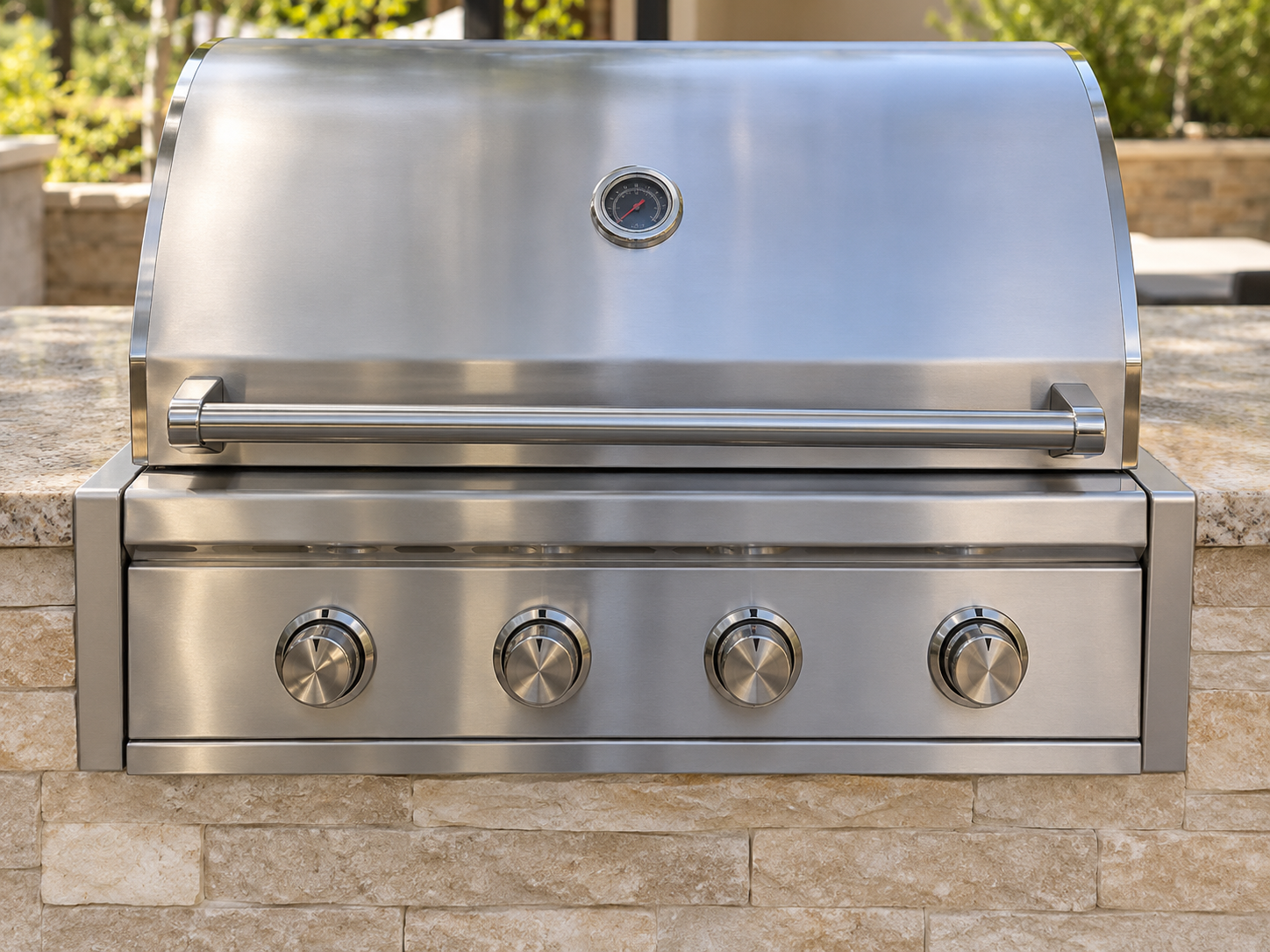
Front-Overlap Installation
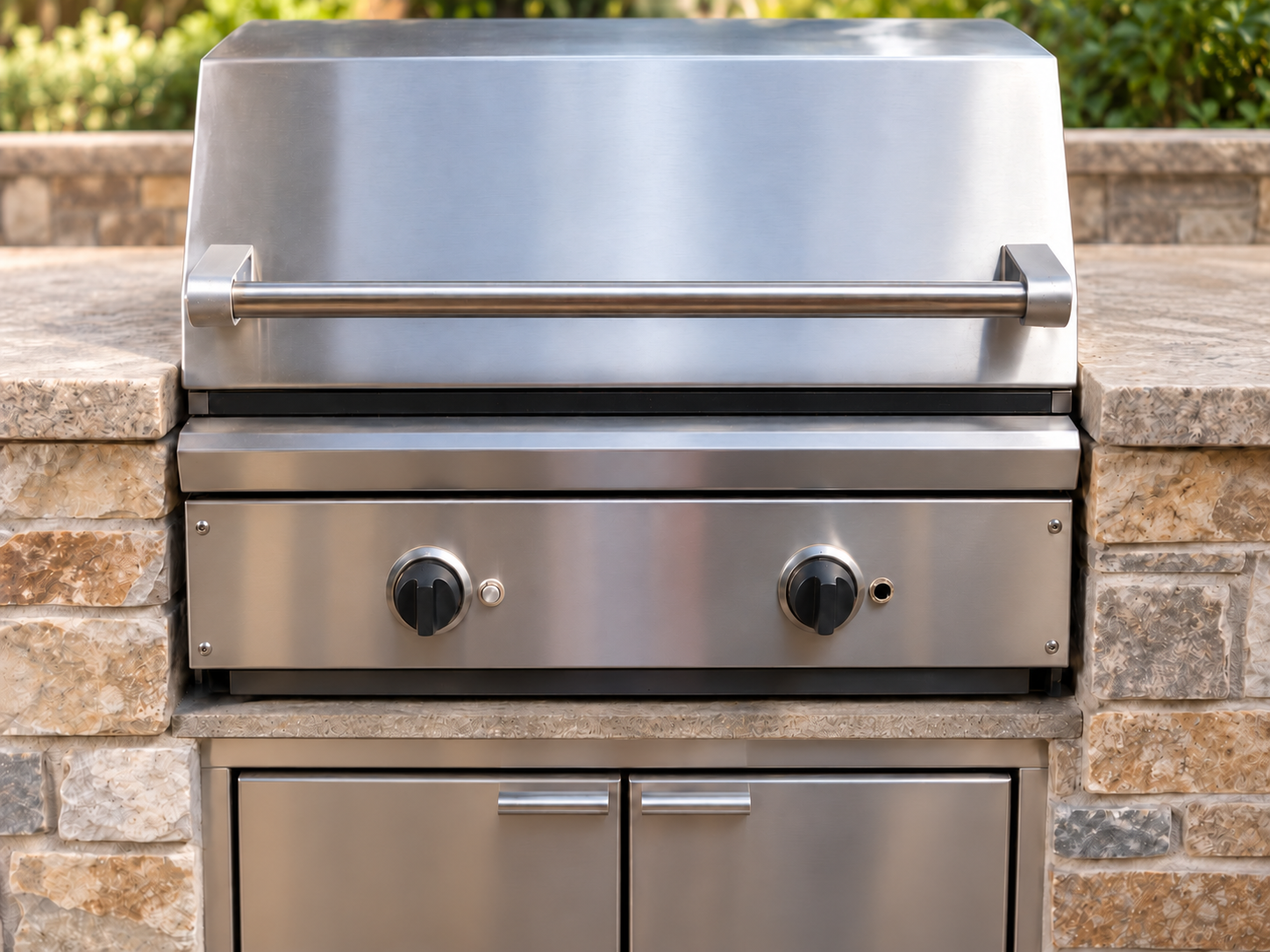
Shelf-Supported Installation
Step 2: Measure the Opening
Measure the opening width, depth, and height. If your grill is shelf-supported, also check the support shelf underneath.
ISLAND OPENING WITHOUT NOTCH CUT
TOP VIEW
FRONT VIEW
Important: Measure the island opening — not the overall grill size.
ISLAND OPENING WITH NOTCH CUT
TOP VIEW
FRONT VIEW
Important: Measure the island opening — not the overall grill size. If your island has a front notch, measure the full notch width. The new grill’s overall width must fit within this opening.
Step 3: Check the New Grill Before You Buy
CLEARANCE & ACCESS
- Make sure the lid can fully open.
- Leave enough room for the rotisserie rod and motor.
GAS & POWER
- Match the gas type: natural gas or propane.
- Check the gas inlet and power cord locations.
- Confirm whether the grill needs an electrical outlet inside the island.
- If using a rotisserie motor, check whether an exterior outlet is needed.
INSTALLATION REQUIREMENTS
- Check the manufacturer’s ventilation requirements.
- If the island contains combustible materials, check whether an insulated jacket is required.
- Inspect the existing gas line, fittings, regulator, and shutoff for wear, damage, or compatibility.
- Follow the manufacturer’s current installation instructions and use qualified gas or electrical professionals when needed.