Plan Your Outdoor Kitchen
Planning an outdoor kitchen? From choosing appliances to picking materials, these practical tips will help you make the most of your space and avoid common mistakes.
Choosing Your Appliances
What should I decide first?
Start by choosing natural gas or propane and determining whether you'll need water, drainage, or electrical connections.
Select your appliances and storage units before finalizing the island design. Don't forget exterior outlets for rotisserie motors, blenders, and other outdoor equipment.
What size grill should I get?
A 32-inch grill is the most popular choice and works well for most families of 1–6. A 36-inch grill is a good middle ground if you want a little more room, while a 42-inch grill is worth considering for larger families or frequent entertaining.
What other appliances and accessories should I consider?
Access doors and door/drawer combinations are popular choices for accessing the inside of your island and providing storage.
Other options include:
- Cooking:
- Side burners, power burners, built-in griddles, charcoal grills, smokers, and built-in or countertop pizza ovens.
- Drinks & entertaining:
- Refrigerators, wine coolers, ice makers, drop-in ice chests, bar centers, sinks, and kegerators.
- Storage & convenience:
- Trash drawers, dry-storage cabinets, extra drawers, and warming drawers.
Choose the features that best fit how you cook, entertain, and use your outdoor space.
Layout & Counter Space
How much space should I leave between cooking appliances?
Aim for about 24 inches between cooking appliances, if space allows. At least 12 inches is a practical target, provided the manufacturer's required clearances are met.
Extra space is useful for food prep, plates, and utensils. Keep in mind that rotisserie motors and spit rods can extend beyond the grill's width.
What layout mistakes should I avoid?
Avoid overcrowding your island with too many appliances or storage units.
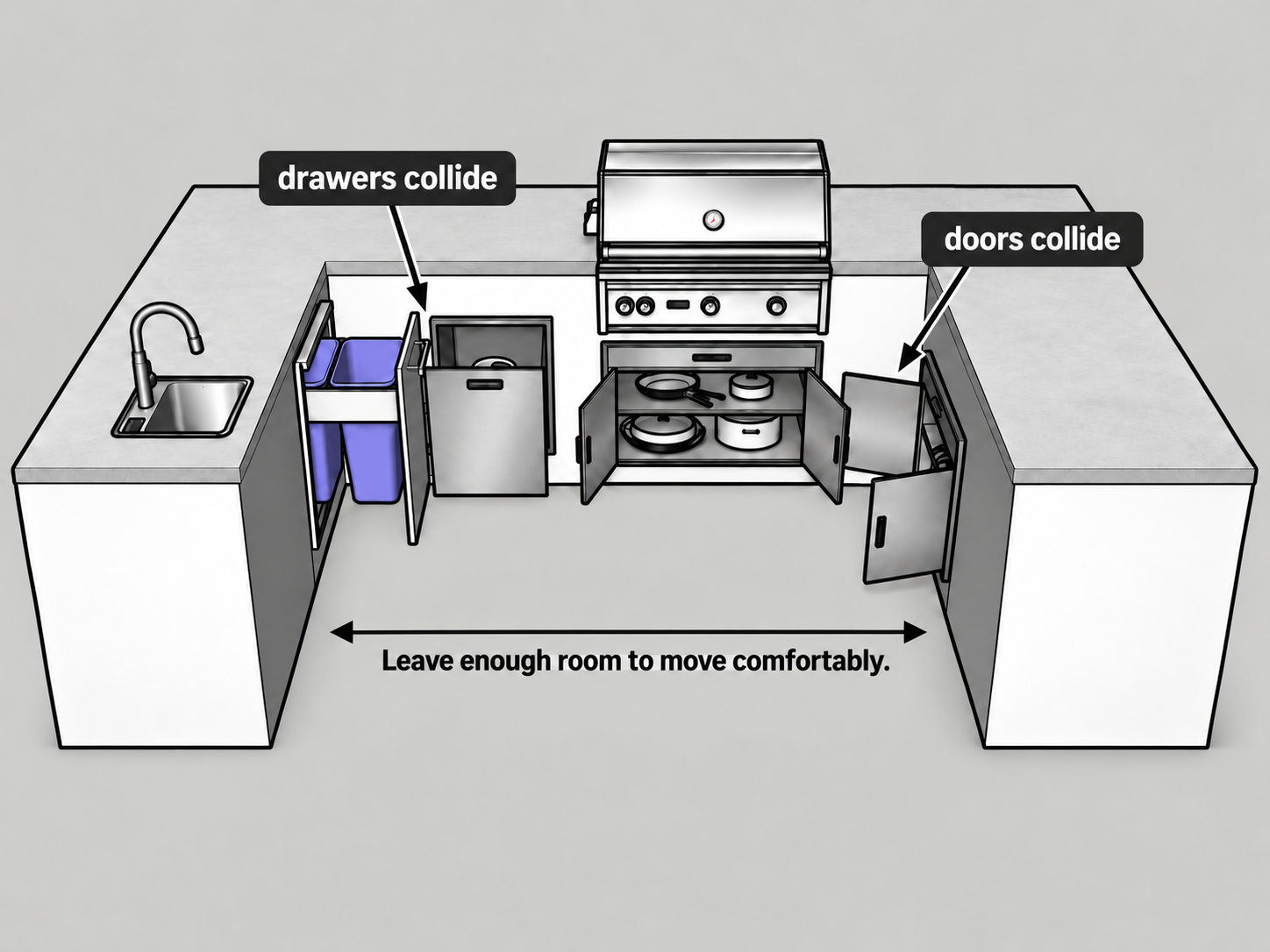
For L-shaped and U-shaped islands, be careful with inside corners. Refrigerator doors, cabinets, and drawers can collide when opened. U-shaped islands also need enough room for people to move around comfortably.
If you want shade, consider planning an umbrella hole in the countertop. Make sure the umbrella is properly supported and positioned away from the grill's heat and required clearances.
Should I include bar seating?
If space allows, bar seating is a great addition. A raised bar typically needs around 12 inches or more of countertop overhang, plus room for stools.
For smaller spaces, consider a seating overhang at one end of the island instead.
Construction & Materials
Prefab or cinderblock: which should I choose?
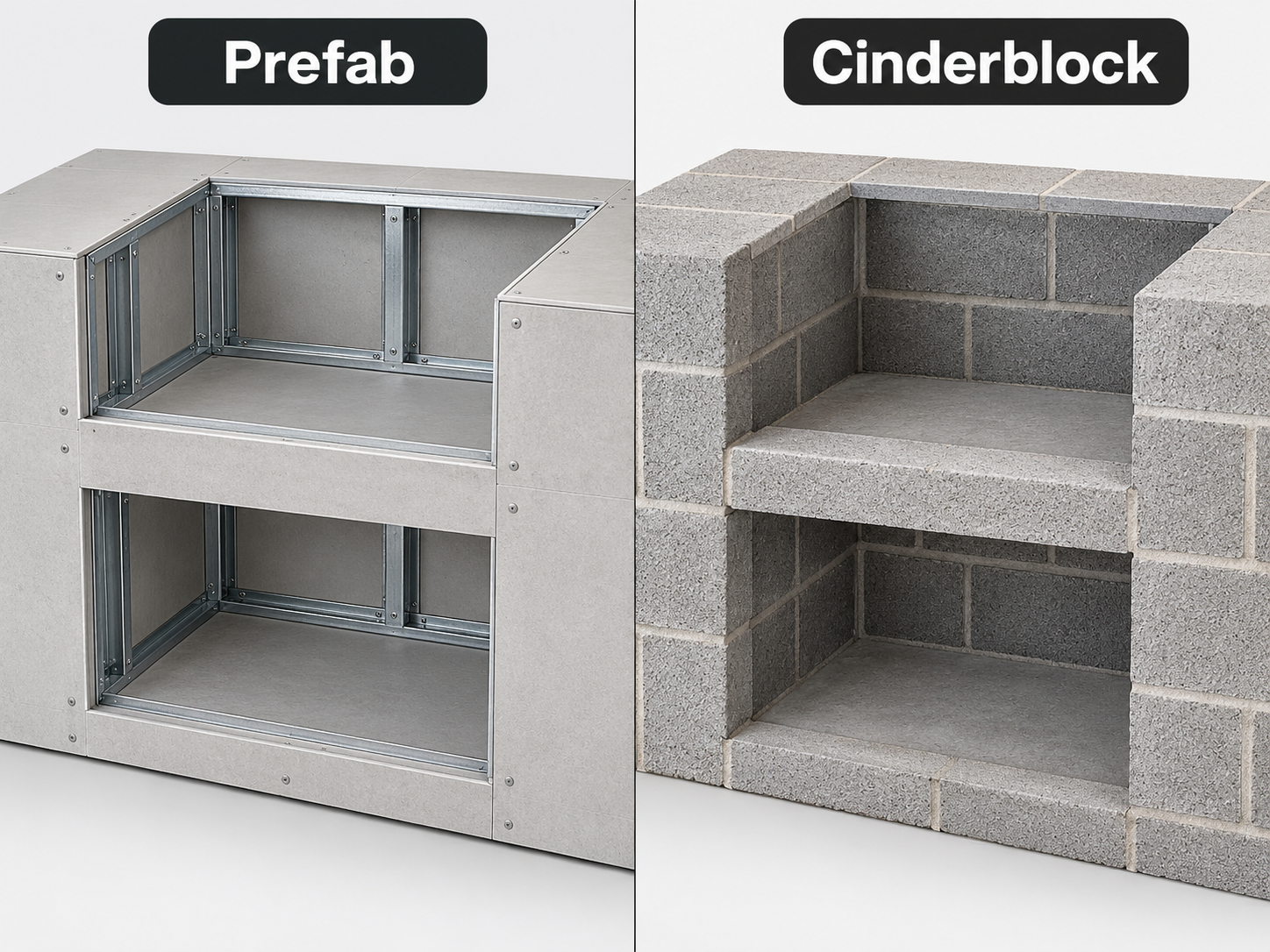
Prefabricated islands typically use metal framing and cement board. They're often more budget-friendly and offer flexible design and placement options.
Cinderblock islands are built on-site and can be customized to blend naturally with your home and backyard. Both are great options depending on your budget, design, and installation needs.
How long does construction take?
Custom prefab islands typically take 2–8 weeks to build, depending on the design and manufacturer.
Cinderblock projects may take longer, particularly when permits and additional construction work are involved.
Should my prefab island have wheels?
Wheels can be useful if your island is self-contained, uses a propane tank, and doesn't have permanent utility connections.
If you're connecting natural gas, electricity, or plumbing, a stationary island generally makes more sense.
Which countertops and finishes should I consider?
Outdoor-rated porcelain tile, granite, and stainless steel are all worth considering. Porcelain is low-maintenance, granite offers a natural stone look, and stainless steel is available on some prefab islands.
For the island base, stucco and stone veneer are popular choices. Consider appearance, durability, and maintenance when choosing your finishes.
Should I match my home's stucco color?
Matching your home's stucco can create a more cohesive look, especially when the island is close to the house.
Keep in mind that differences in material and texture can make an exact match difficult.
Installation & Requirements
Do I need ventilation or a vent hood?
Ventilation and clearance requirements vary by appliance, island construction, and installation location.
Check the manufacturer's instructions and local requirements, especially if your kitchen will be under a roof or other overhead structure.
Will I need permits?
Permit requirements vary by location, utility connections, and whether the island is permanently secured to the ground, a wall, or another structure.
Check with your local building department before starting construction.
A Few Final Tips
Invest in quality cooking appliances.
Look for reliable manufacturers, good warranties, and replacement-part availability. You can often save money on storage accessories and island finishes without sacrificing quality.
Keep your outdoor kitchen maintained.
Regularly clean and care for your grill, refrigerator, and other appliances to help them last longer.